Making Glass Beads in Hakuba, Japan: A Perfect Rainy-Day Activity
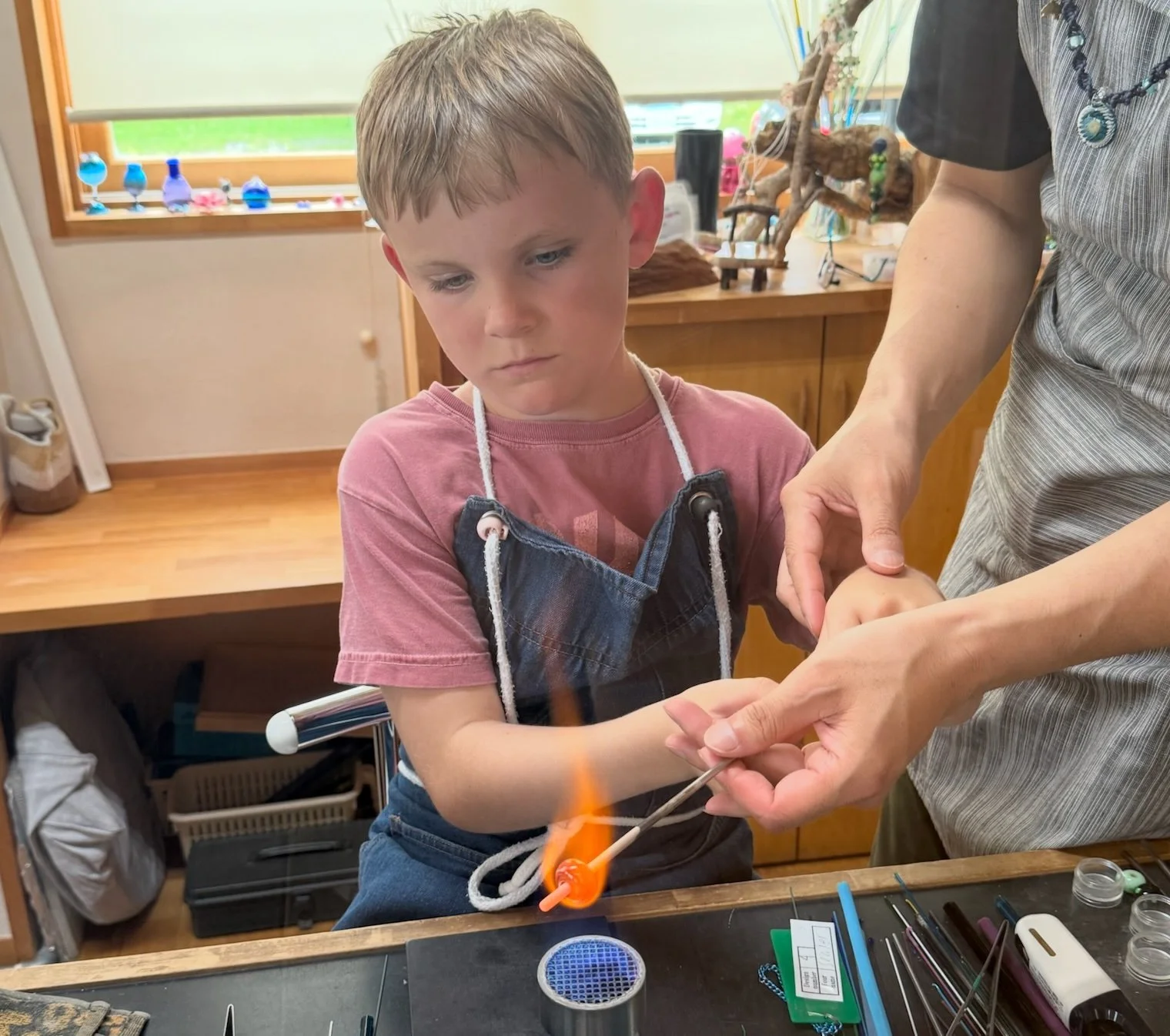
Making our own tonbodama glass beads at Gaku Glass in Hakuba. It was an unexpectedly perfect way to spend a very rainy first day in the Japanese Alps.
Quick Summary
Gaku Glass in Hakuba, Japan is a wonderful rainy-day activity during green season, especially when many outdoor activities are closed. We made tonbodama glass beads, chose our own colors and designs, and turned them into necklaces with help from kind, English-speaking staff.
The full experience took about 1.5–2 hours, including a 45-minute cooling period. Our finished necklaces and keychains cost about ¥3,500 per person, or roughly $22 USD.
Visiting Hakuba in Early Green Season
We arrived in Hakuba during green season, before the busier mid-July summer period when Japanese children are out of school. Because of that, the area was quiet, and many activities were still closed.
That can be a little tricky if you arrive during rainy weather. Hakuba is known for mountains, gondolas, hiking, and outdoor adventure, but on our first day, the rain was intense. We were looking for something indoors, low-stress, and still memorable.
Gaku Glass ended up being exactly that.
Making Tonbodama Glass Beads
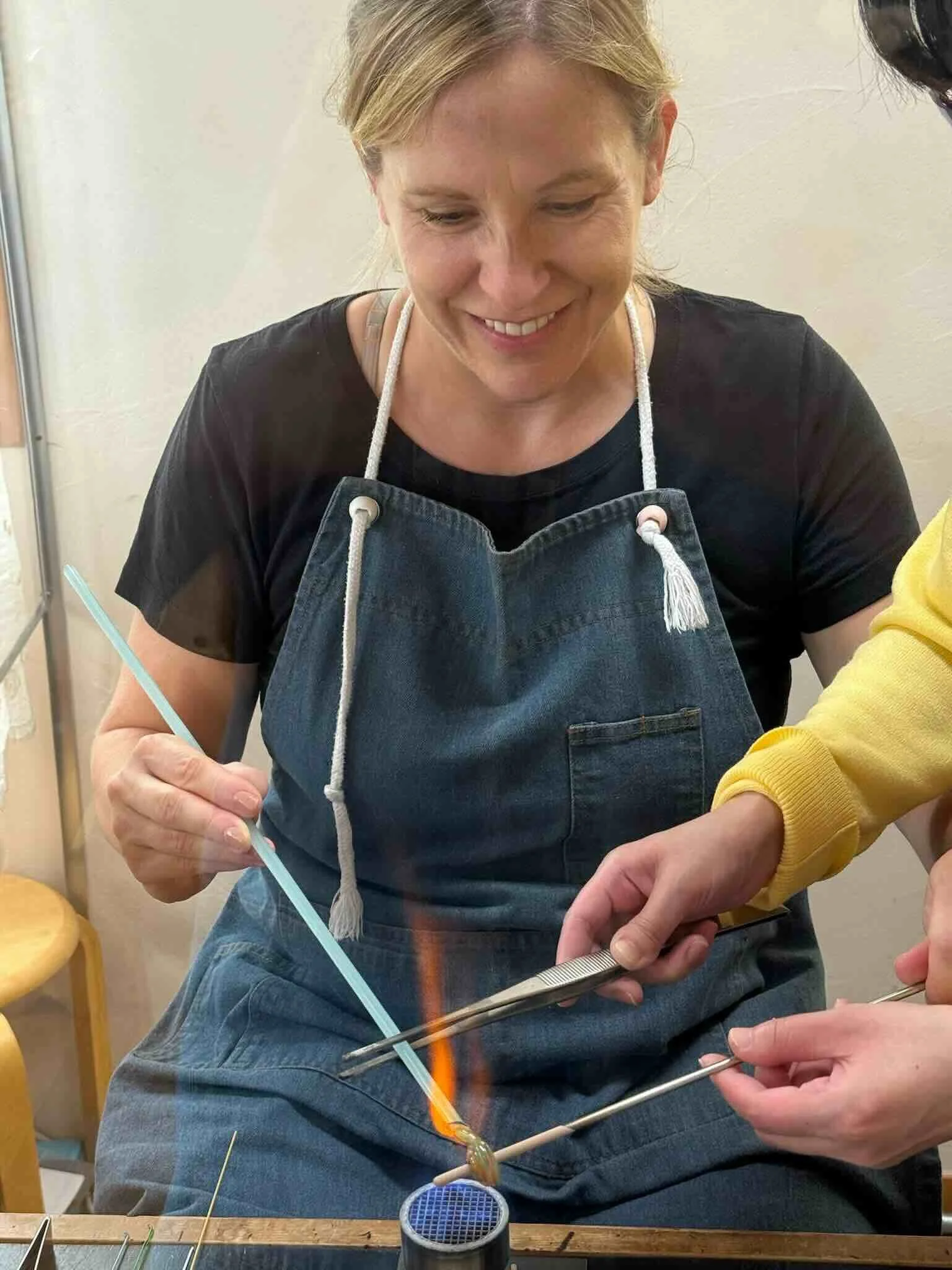
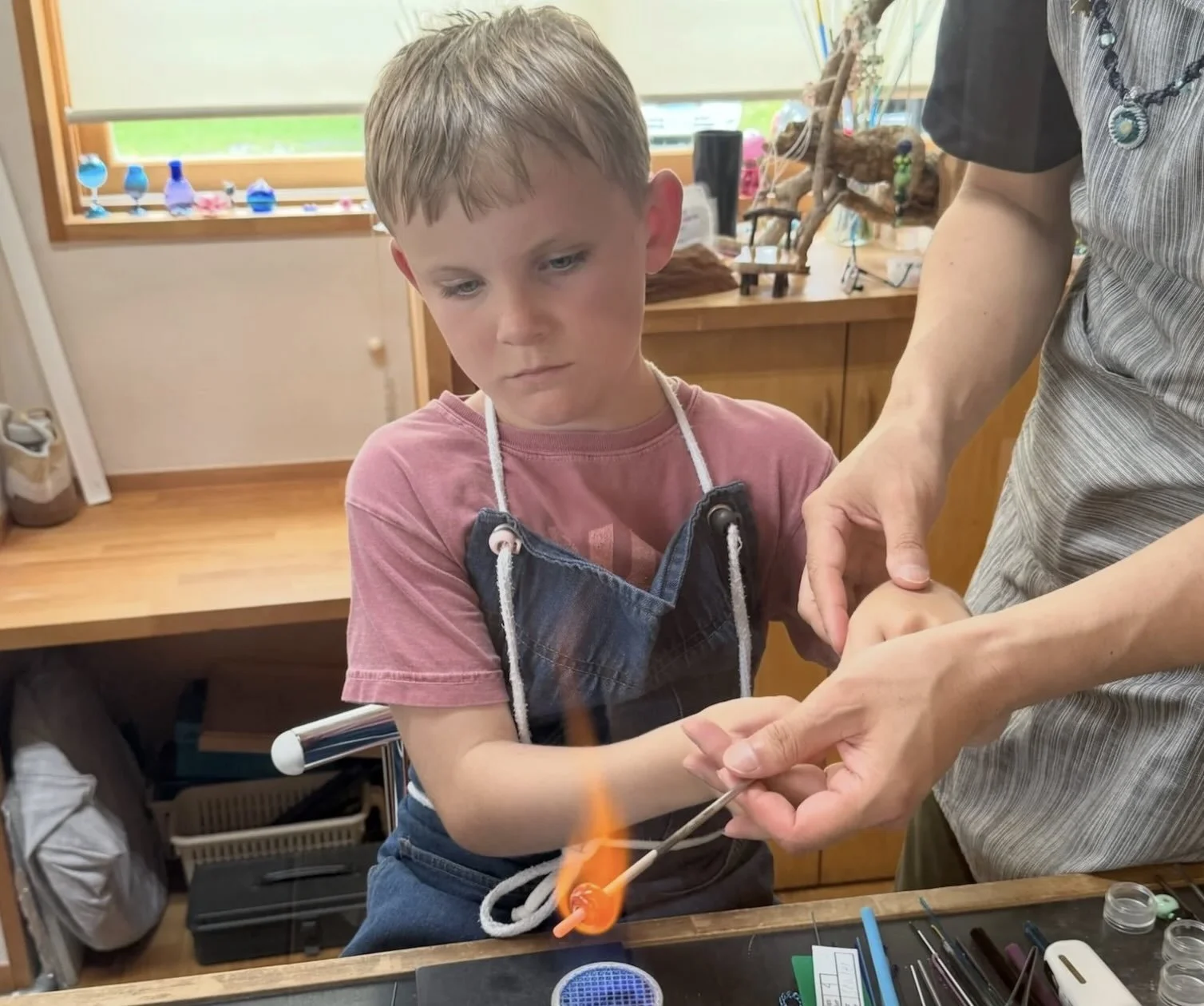
Trying my hand at making a tonbodama glass bead, with plenty of patient, step-by-step guidance along the way. Of course I picked the hardest option.
At the workshop, we made tonbodama (dragonfly) beads, which are small traditional handcrafted decorative glass beads. They are made by heating and then wrapping molten glass rods around iron cores, and then adding intricate decorations.
We were able to choose from several different styles and glass elements, including marble-like swirls, flowers, dots of colored glass, and a crackled grass-like effect inside the bead.
Some bead options were only available for children over age six, but our eight-year-old was able to choose his own design. Each of us picked our colors, then sat at the workbench while the studio staff guided us through the process step by step.
The staff stood right beside us and helped us heat and shape the glass. They spoke English and were incredibly welcoming, which made the whole experience feel relaxed rather than intimidating.
Waiting for the Beads to Cool
After the beads were made, they needed to cool in ash for about 45 minutes. While we waited, we looked around at the glass art in the studio and then sat at a table where our son could draw.
There isn’t much immediately around the studio, but if you have a car, you could leave and come back. There were a few restaurants nearby, so if you timed your visit well, you could pair the workshop with lunch, even if you are traveling without a car.
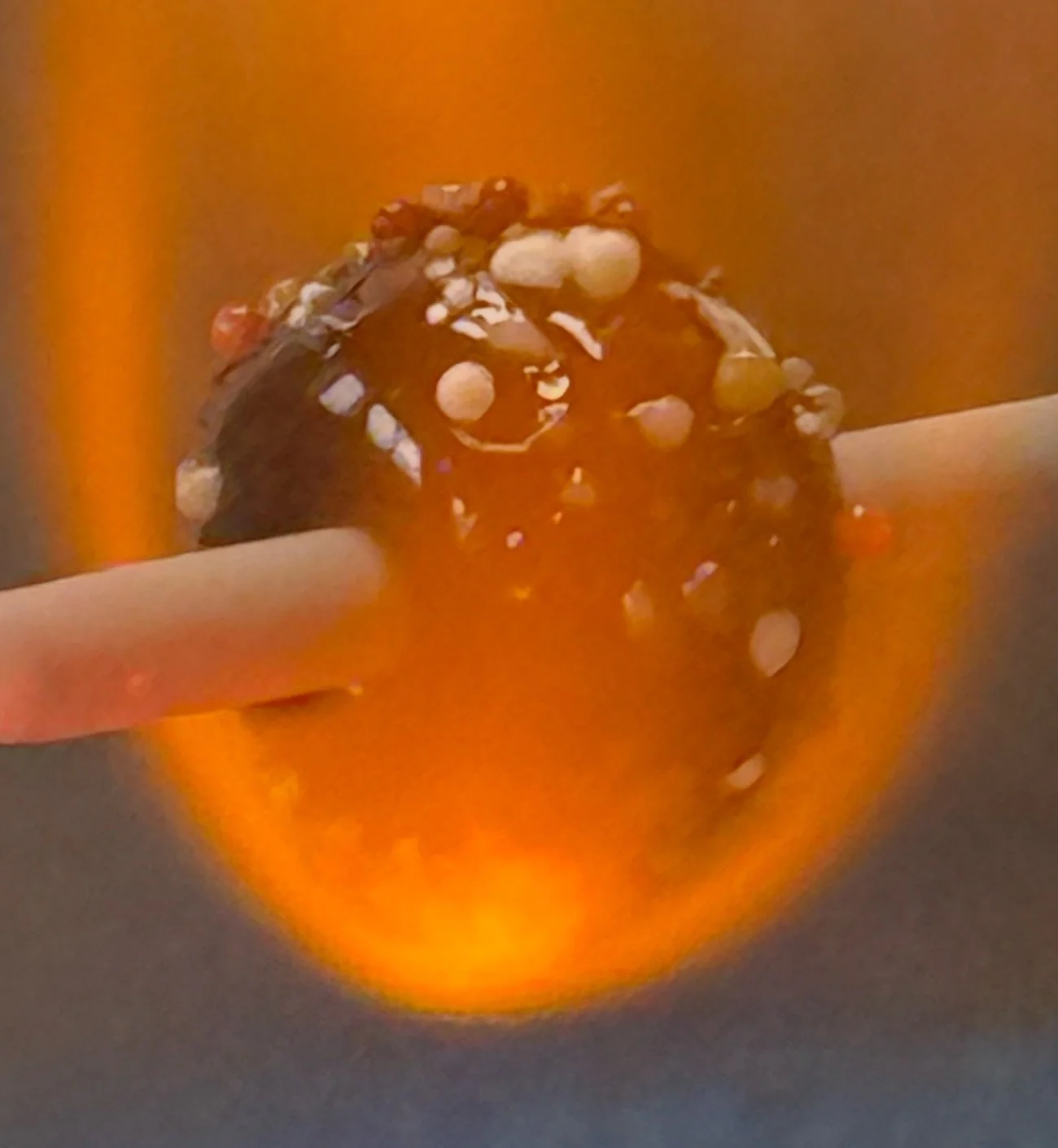
A close-up of my husband’s bead taking shape in the flame—courtesy of our eight-year-old photographer.
Turning the Beads Into Necklaces
Once the beads cooled, we were able to turn them into finished pieces. You could make a necklace, bracelet, or keychain, using your main glass bead as the centerpiece.
There were tables full of smaller glass beads in different colors, and we each got to choose the accent beads, string color, and clasp type. My son especially loved threading the beads and designing his own necklace. The adults opted for keychains that will double as Christmas ornaments—gathering ornaments has become a fun family tradition that allows us to savor memories of our travels.
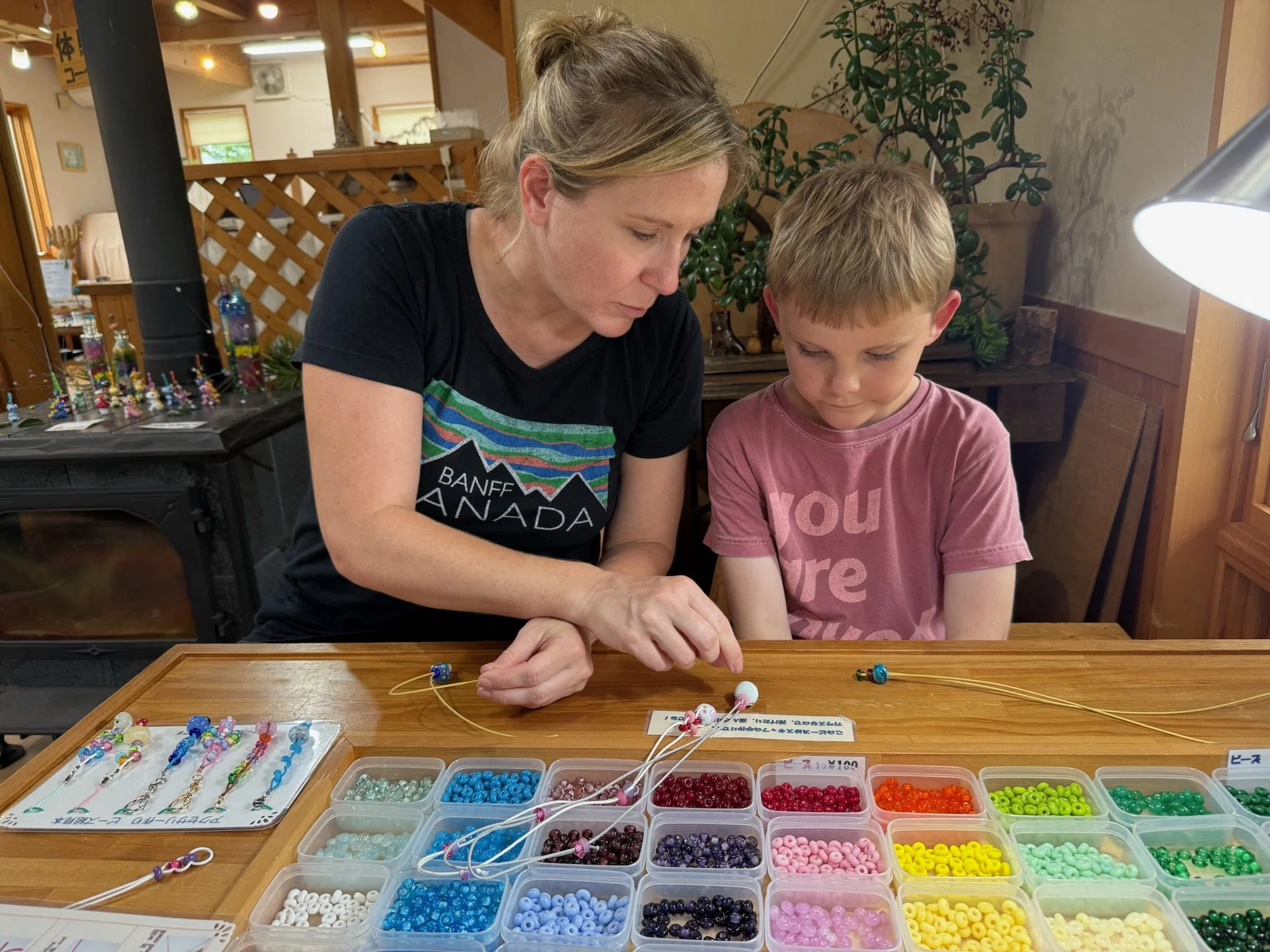
Choosing the smaller glass beads to turn our finished pieces into necklaces and keychains.
Cost
The cost depended on the complexity of the bead and materials. The main bead options ranged from about 1,500 to 2,300 yen, or roughly $9–$14 USD.
After adding accessory beads, string, and the necklace/keychain materials, our finished pieces were closer to 3,500 yen per person, or about $22 USD.
Was It Worth It?
Absolutely. This was such a fun, unique way to spend a rainy day in Hakuba. It was creative, hands-on, kid-friendly, and easy to enjoy even without much advance planning.
We had our hotel call ahead to make a reservation, but during this quiet early-season period, we probably could have walked in. During busier times, I’d still recommend calling or booking ahead.
For us, Gaku Glass turned a very rainy first day into something memorable. We left with beautiful handmade souvenirs and the rare kind of travel activity that was just as enjoyable for the adults as it was for our son.

Our finished pieces—each one completely different, and now some of our favorite souvenirs from Japan.
Get new stories, practical travel ideas, and honest reflections on exploring the world as a family without waiting for the perfect time, the perfect plan, or the perfect trip.
Come Along
About Christal

Snuggling sled dog puppies in Ilulissat, Greenland
I’m a clinical psychologist, professor, and writer who believes in resisting hustle culture and finding awe through slow, meaningful travel with my family.
I’ve explored five continents, often blending work and play through teaching abroad and cultural immersion.
I created We Went Anyway as a space to share stories about choosing presence over perfection and finding joy in a full, connected life through adventure — big and small.
When I’m not writing or hiking, you’ll find me sipping peppermint tea on the porch with friends, building Legos with my son, watching design videos to guide the slow remodel of our 119-year-old home, or planning the next family trip from our home base in Kentucky.